Loading...
Serving Ridgecrest, CA and surrounding areas. (442) 294-1830
Livestock containment and property fencing for the high desert. Posts set for caliche soil, wire matched to your animals, and gates that work right in every season.
Farm and ranch fencing in Ridgecrest means matching wire style, post depth, and bracing to your specific animals and land conditions - most rural property jobs take anywhere from one day for a small paddock to several days for a multi-acre perimeter, with rocky desert soil being the biggest variable in both cost and timeline.
The area around Ridgecrest includes a lot of rural and semi-rural parcels used for horses, livestock, and small-scale agriculture. Fencing a large property in the Indian Wells Valley is a different job than fencing a suburban backyard - the runs are longer, the terrain is uneven, and the soil can stop a standard auger cold. A contractor who has worked in this part of Kern County will know the difference.
If you are managing animals and also want to contain pets closer to the house, pet and dog fencing options can be integrated into the same project plan. For perimeter runs across long stretches, chain link fencing is another durable option worth discussing.
If you can see posts tilting away from vertical - especially at corners - the fence is losing its structural integrity. In Ridgecrest's sandy desert soil, posts that were not set deep enough or properly anchored will shift over time, especially after strong winds. A leaning post will not fix itself and the longer you wait, the more of the fence line it pulls with it.
Wire that hangs loose between posts is no longer containing animals or marking a boundary. Sagging often means the wire has lost tension, a post has shifted, or the wire has corroded. In the Mojave Desert's intense UV environment, wire and hardware can degrade faster than in milder climates - even a fence that looks intact from a distance may have hidden weak spots.
If your livestock are getting out, or if you are finding evidence of predators working through the fence line, that is the clearest possible sign the fence is failing. Even a small gap or a section of low-tension wire is enough for a determined goat or coyote. Do not wait for an animal injury before addressing it.
A gate that drags on the ground, swings open on its own, or will not latch is both a safety hazard and a sign that gate posts may be shifting. In Ridgecrest's hard caliche soil, gate posts not properly set at installation are especially prone to movement over time - and a failing gate is often the first visible sign of a larger fence problem.
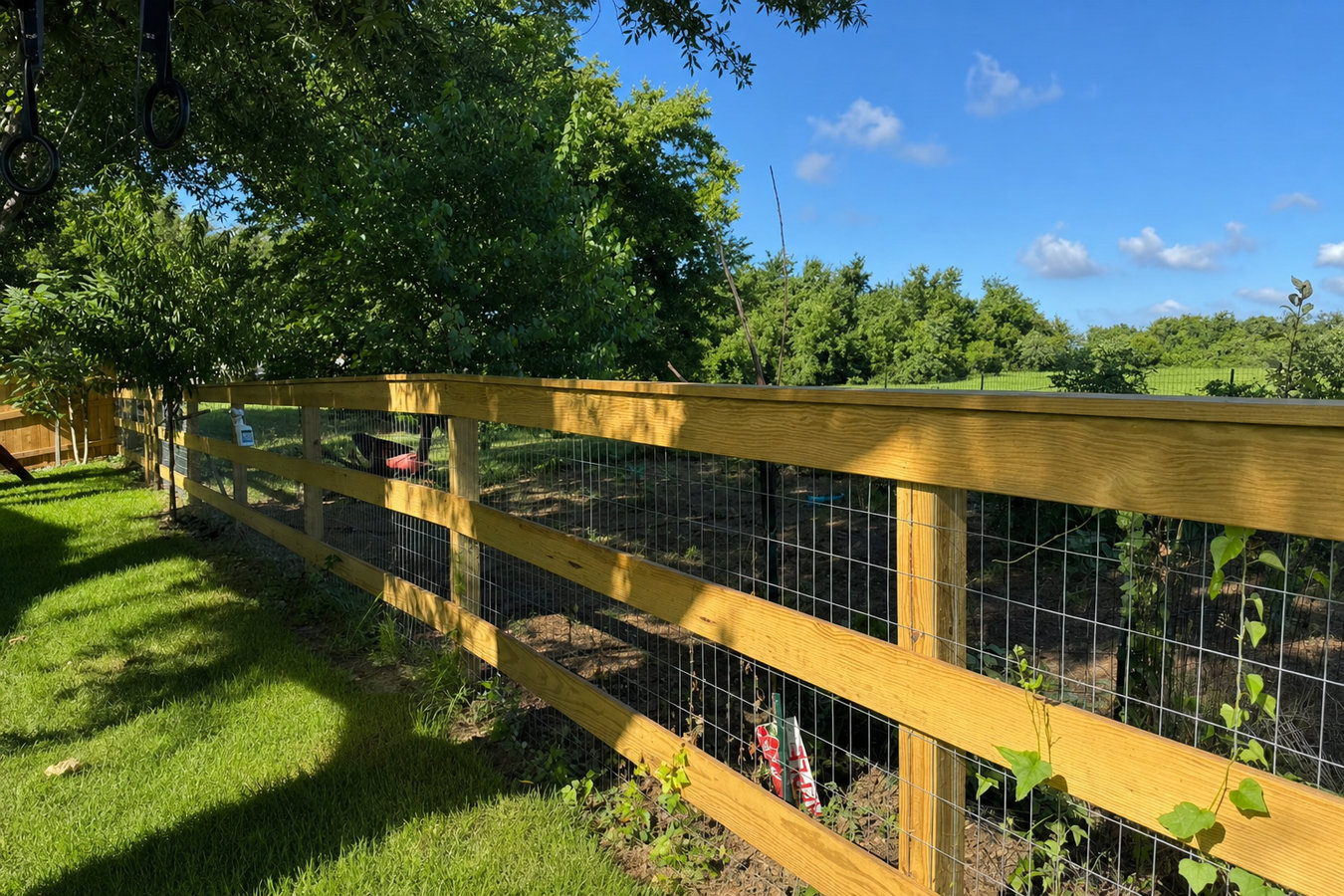
We install all common agricultural fence styles - woven wire field fence for sheep and goats, high-tensile smooth wire for larger ranch perimeters, barbed wire for cattle pastures, pipe fencing for horse paddocks, and wood rail fencing where appearance matters as much as containment. Every job starts with an on-site visit because the terrain and soil conditions on a rural Kern County parcel can vary dramatically from one corner to the next - and a phone quote cannot account for that.
Corners and gate posts get extra attention on every job. These are the points where all the tension in a fence line comes together, and a corner that fails will pull the rest of the fence with it. We also handle everything needed before digging starts - confirming buried utility lines are marked and, where required, pulling the relevant Kern County permit. If you are adding to an existing fence rather than starting from scratch, we can assess what is worth keeping and what needs to be replaced.
Best for sheep, goats, and smaller livestock where gap spacing and height need to be matched to the animal.
Well-suited for larger ranch perimeters where long fence runs need to hold tension without frequent post supports.
Ideal for horse paddocks and corrals that need strength and safety without the injury risk of barbed wire.
A cost-effective traditional choice for large cattle pastures where the primary goal is boundary and containment.
Ridgecrest sits in the Mojave Desert, where the ground often starts with loose sand and then hits a layer of caliche - calcium carbonate that can be almost as hard as rock - just a foot or two down. Drilling or driving posts through that layer requires specialized equipment, and it adds meaningful time to any post-setting job. Crews that work in milder agricultural soil do not always have the right equipment or the experience to handle it correctly. We do. We also know that summer temperatures regularly pushing past 100 degrees F affect when crews can safely work and how concrete around posts must be managed to cure properly and stay strong.
We work on rural and semi-rural properties across the area, including clients in Inyokern and North Edwards, where large lot sizes and desert terrain are the norm. The University of California Agriculture and Natural Resources publishes fencing guidance for California livestock operations that is worth reviewing if you are planning a large project. Before any post holes are drilled, we contact the underground utility notification service to have buried lines marked - which is required by California law and protects your property.
We respond within one business day. For rural property jobs, we always schedule an on-site visit - phone quotes for farm fencing are rarely accurate because terrain and soil conditions vary so much from parcel to parcel.
We walk the property with you, check soil conditions, discuss your animals, and review gate placement. You get a written estimate that breaks down materials, labor, and any permit fees - so you know exactly what you are agreeing to before work starts.
Before any digging starts, we contact the underground utility notification service to have buried lines marked. If your project requires a Kern County permit, we handle that application as well. Both steps protect you and are required before posts are set.
Corners and gate posts go in first with extra bracing - they carry the most tension in any fence line. Line posts follow at proper spacing for your fence type. Wire is stretched and attached in sections, gates are hung and latched, and we walk the entire line with you before leaving.
On-site estimates only - we need to see your land and soil before we quote. No obligation, no pressure.
(442) 294-1830Caliche and hard desert soil stop a standard auger. We bring power drilling equipment rated for the ground conditions common throughout Kern County's desert region, so posts go in at the right depth the first time - not just as far as a lighter tool would allow.
The fence style that works for cattle does not necessarily work for goats - and a contractor who installs the wrong type will leave you with a containment problem. We ask about your specific animals before recommending wire style, height, and post spacing.
Corners are where fence failures start. We build proper H-brace assemblies at every corner and gate post, with deeper anchoring and heavier bracing than line posts. A well-built corner is what keeps a long fence run from sagging or pulling inward over time.
We know the permit requirements for rural fencing projects in Kern County, and we are familiar with the utility and terrain conditions common on properties throughout the Indian Wells Valley. Local experience is not just a sales point here - it directly affects how a job gets done.
A fence that fails in the first wind event or the first time an animal tests it is a fence that was not built for this area. We have worked on rural properties throughout the Ridgecrest region and we build every fence to handle what this climate and this soil actually throw at it.
Yard containment fencing designed specifically to keep dogs safely inside - a natural addition to a larger rural property fencing plan.
Learn MoreDurable woven steel fencing for long perimeter runs on rural and semi-rural properties where strength and cost efficiency matter.
Learn MoreSpots fill up fast before spring. Get your on-site estimate scheduled now and lock in your installation date.